
The Role of the National Construction Authority in Kenya
The National Construction Authority (NCA) is a state corporation established with the aim of regulating, optimising, and promoting safety, quality, and professionalism in the construction industry. Obtaining NCA registration enables building experts to comply with Kenyan construction law, enhance their credibility with clients, and access valuable training programs offered by the NCA. Looking to register or upgrade your NCA certification? At Kapstone Works Africa Limited, we provide professional help with document preparation, submission, and follow-up to ensure that your application is approved promptly. In this article, we have highlighted some of the major roles of the NCA in the construction industry, such as registration, certification, and accreditation of construction workers, quality assurance, enforcement of building codes, providing advisory services, and publishing a code of conduct.
Key Roles of the NCA in the Construction Industry in Kenya
1. Registration and Certification of Contractors
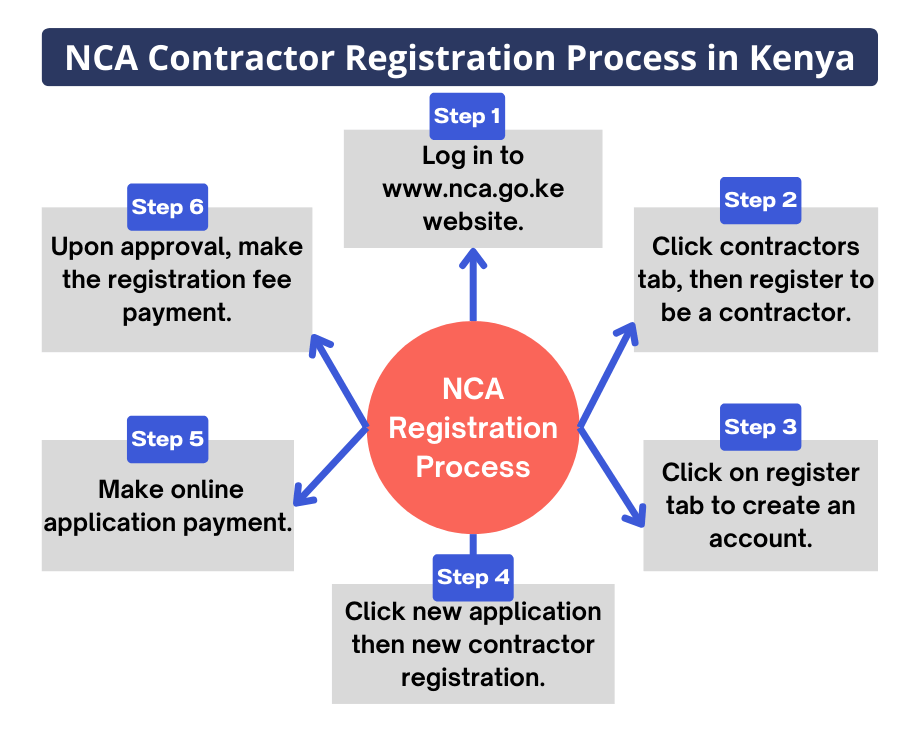
One of the main roles of the NCA is the registration and certification of contractors, which involves assessing whether they meet the required professional and technical standards before operating in the construction industry. The NCA issues licences in five main categories, which include building, water, road, mechanical, and electrical works, depending on the contractor’s area of specialisation. The NCA also registers contractors in different classes, from NCA 1 to NCA 8, based on the size and value of contracts they are qualified to handle. By registering with the NCA, contractors comply with the Kenyan construction laws, are eligible to bid for government and private sector projects, and gain credibility among clients.
2. Accreditation of Construction Workers
Accreditation involves the evaluation of the competence of construction workers and their compliance with nationally and internationally recognised building standards. To be accredited by the NCA in Kenya, construction workers must meet specific technical and educational requirements, such as passing the National Industrial Training Authority (NITA) trade tests. They should also submit technical certificates from an accredited training institution, and a copy of their national Identification Card (ID) and passport photo. By accrediting all building professionals in Kenya, the NCA ensures that construction workers are highly qualified, promoting professional standards, thus protecting clients against poor workmanship and disregard for building regulations. Whether building an apartment, school, hospital, residential house, or plumbing works, construction workers must be registered by the NCA.
3. Training and Capacity Building
Constant professional development is essential for construction workers as it helps keep them updated with modern developments in technology, building techniques, and efficient project delivery. Training and capacity building by the NCA includes the Continuous Technical Development (CTD) programme for skilled construction workers and site supervisors, and Continuous Professional Development (CPD) for contractors. The NCA also offers on-site training for construction workers and talks as part of a mentorship programme in institutions of higher learning, especially Technical and Vocational Education and Training (TVET) institutions. Training and capacity building of construction workers is essential as the professionals are equipped with up-to-date skills that meet industry dynamics, it promotes safe working spaces, and contributes to a sustainable construction sector in Kenya.
4. Conduct Research and Give Recommendations
The NCA is responsible for researching matters affecting the construction industry and making appropriate recommendations that can promote its advancement. The NCA is mandated to undertake research and present findings to stakeholders, encourage the improvement of building techniques, maintain a construction industry information system, and provide advisory solutions. To support its mandate for conducting and commissioning research, the NCA launched the National Construction Research Agenda (NaCRA), which helps to identify gaps and challenges in the construction industry in Kenya that need to be addressed. The NCA ensures that decisions affecting the building industry in Kenya are informed by data and evidence, thereby helping to develop effective policies and regulations that benefit contractors, construction workers, and property owners.
5. Enforcement of the Building Code
The building code is a set of regulations and standards that are developed with the intention of regulating aspects of the design, construction, materials, and building occupancy that are necessary for ensuring human safety. The NCA enables building code enforcement by promoting sustainable practices, introducing strict safety measures, and simplifying approval procedures to improve structural integrity and prevent accidents caused by substandard construction. The NCA also conducts investigations on complaints, takes action against non-compliant individuals, and assigns officials to ensure adherence to the building codes. By enforcing building codes, the NCA ensures that buildings in Kenya maintain occupants’ health and comfort, withstand natural disasters, offer protection, and promote energy efficiency. In case you are in the process of constructing a building, whether a hospital, school, church, godown, bungalow, apartment, or a perimeter wall, reach out to our NCA registered experts for the best services.
6. Develop and Publish a Code of Conduct for the Construction Industry
A code of conduct is a set of guidelines and principles that contain an outline of the expected ethical standards within an organisation. The NCA Act mandates the board members to develop and publish a code of conduct for the construction industry. The code of conduct is applicable to all parties in the construction industry, including construction consultants, contractors, sub-contractors, regulators, procuring agents, construction workers such as plumbers and masons, site supervisors, suppliers, and tenderers. The code of conduct helps in guiding and regulating the behaviour of individuals involved in construction-related activities and establishes the standards against which their conduct can be measured and monitored. By having a clearly defined code of conduct, the NCA enables ethical decision-making in construction projects and helps ensure legal compliance.
For those looking for help with NCA registration, accreditation, or licensing, we specialise in offering assistance to simplify the process and ensure compliance with regulatory requirements. Get in touch with us today and find out how we can help. In addition, we help with NEMA and county approvals, which are required for construction in Kenya.

For those looking for help with NCA registration, accreditation, or licensing, we specialise in offering assistance to simplify the process and ensure compliance with regulatory requirements. Get in touch with us today and find out how we can help. In addition, we help with NEMA and county approvals, which are required for construction in Kenya.
Summary
The NCA is a statutory body responsible for regulating and enabling the development of the construction industry. The NCA plays a major role in the construction industry, with some of its responsibilities including enforcing building codes, conducting research and providing recommendations, promoting quality assurance, capacity building, and accrediting construction workers, among others. Compliance with NCA regulations enables construction workers to conduct projects that are within the limits of the law, thereby protecting them from penalties and legal issues. By following NCA laws, professionals ensure that their projects meet the highest standards of safety. If you are a land owner, contractor, or construction worker looking to register or comply with NCA requirements, our experts are readily available to help. Contact our professional consultants now and let us handle every step of your NCA certification.
The Role of the National Construction Authority in Kenya
The National Construction Authority (NCA) is a state corporation established with the aim of regulating, optimising, and promoting safety, quality, and professionalism in the construction industry. Obtaining NCA registration enables building experts to comply with Kenyan construction law, enhance their credibility with clients, and access valuable training programs offered by the NCA. Looking to register or upgrade your NCA certification? At Kapstone Works Africa Limited, we provide professional help with document preparation, submission, and follow-up to ensure that your application is approved promptly. In this article, we have highlighted some of the major roles of the NCA in the construction industry, such as registration, certification, and accreditation of construction workers, quality assurance, enforcement of building codes, providing advisory services, and publishing a code of conduct.
Key Roles of the NCA in the Construction Industry in Kenya
1. Registration and Certification of Contractors
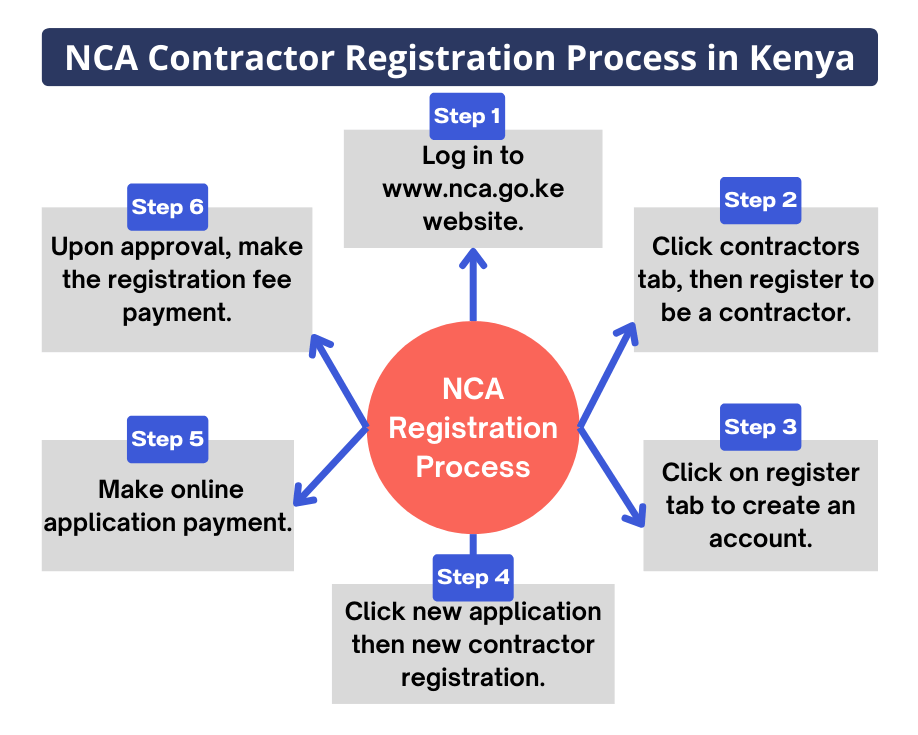
One of the main roles of the NCA is the registration and certification of contractors, which involves assessing whether they meet the required professional and technical standards before operating in the construction industry. The NCA issues licences in five main categories, which include building, water, road, mechanical, and electrical works, depending on the contractor’s area of specialisation. The NCA also registers contractors in different classes, from NCA 1 to NCA 8, based on the size and value of contracts they are qualified to handle. By registering with the NCA, contractors comply with the Kenyan construction laws, are eligible to bid for government and private sector projects, and gain credibility among clients.
2. Accreditation of Construction Workers
Accreditation involves the evaluation of the competence of construction workers and their compliance with nationally and internationally recognised building standards. To be accredited by the NCA in Kenya, construction workers must meet specific technical and educational requirements, such as passing the National Industrial Training Authority (NITA) trade tests. They should also submit technical certificates from an accredited training institution, and a copy of their national Identification Card (ID) and passport photo. By accrediting all building professionals in Kenya, the NCA ensures that construction workers are highly qualified, promoting professional standards, thus protecting clients against poor workmanship and disregard for building regulations. Whether building an apartment, school, hospital, residential house, or plumbing works, construction workers must be registered by the NCA.
3. Training and Capacity Building
Constant professional development is essential for construction workers as it helps keep them updated with modern developments in technology, building techniques, and efficient project delivery. Training and capacity building by the NCA includes the Continuous Technical Development (CTD) programme for skilled construction workers and site supervisors, and Continuous Professional Development (CPD) for contractors. The NCA also offers on-site training for construction workers and talks as part of a mentorship programme in institutions of higher learning, especially Technical and Vocational Education and Training (TVET) institutions. Training and capacity building of construction workers is essential as the professionals are equipped with up-to-date skills that meet industry dynamics, it promotes safe working spaces, and contributes to a sustainable construction sector in Kenya.
4. Conduct Research and Give Recommendations
The NCA is responsible for researching matters affecting the construction industry and making appropriate recommendations that can promote its advancement. The NCA is mandated to undertake research and present findings to stakeholders, encourage the improvement of building techniques, maintain a construction industry information system, and provide advisory solutions. To support its mandate for conducting and commissioning research, the NCA launched the National Construction Research Agenda (NaCRA), which helps to identify gaps and challenges in the construction industry in Kenya that need to be addressed. The NCA ensures that decisions affecting the building industry in Kenya are informed by data and evidence, thereby helping to develop effective policies and regulations that benefit contractors, construction workers, and property owners.
5. Enforcement of the Building Code
The building code is a set of regulations and standards that are developed with the intention of regulating aspects of the design, construction, materials, and building occupancy that are necessary for ensuring human safety. The NCA enables building code enforcement by promoting sustainable practices, introducing strict safety measures, and simplifying approval procedures to improve structural integrity and prevent accidents caused by substandard construction. The NCA also conducts investigations on complaints, takes action against non-compliant individuals, and assigns officials to ensure adherence to the building codes. By enforcing building codes, the NCA ensures that buildings in Kenya maintain occupants’ health and comfort, withstand natural disasters, offer protection, and promote energy efficiency. In case you are in the process of constructing a building, whether a hospital, school, church, godown, bungalow, apartment, or a perimeter wall, reach out to our NCA registered experts for the best services.
6. Develop and Publish a Code of Conduct for the Construction Industry
A code of conduct is a set of guidelines and principles that contain an outline of the expected ethical standards within an organisation. The NCA Act mandates the board members to develop and publish a code of conduct for the construction industry. The code of conduct is applicable to all parties in the construction industry, including construction consultants, contractors, sub-contractors, regulators, procuring agents, construction workers such as plumbers and masons, site supervisors, suppliers, and tenderers. The code of conduct helps in guiding and regulating the behaviour of individuals involved in construction-related activities and establishes the standards against which their conduct can be measured and monitored. By having a clearly defined code of conduct, the NCA enables ethical decision-making in construction projects and helps ensure legal compliance.
For those looking for help with NCA registration, accreditation, or licensing, we specialise in offering assistance to simplify the process and ensure compliance with regulatory requirements. Get in touch with us today and find out how we can help. In addition, we help with NEMA and county approvals, which are required for construction in Kenya.
For those looking for help with NCA registration, accreditation, or licensing, we specialise in offering assistance to simplify the process and ensure compliance with regulatory requirements. Get in touch with us today and find out how we can help. In addition, we help with NEMA and county approvals, which are required for construction in Kenya.
Summary
The NCA is a statutory body responsible for regulating and enabling the development of the construction industry. The NCA plays a major role in the construction industry, with some of its responsibilities including enforcing building codes, conducting research and providing recommendations, promoting quality assurance, capacity building, and accrediting construction workers, among others. Compliance with NCA regulations enables construction workers to conduct projects that are within the limits of the law, thereby protecting them from penalties and legal issues. By following NCA laws, professionals ensure that their projects meet the highest standards of safety. If you are a land owner, contractor, or construction worker looking to register or comply with NCA requirements, our experts are readily available to help. Contact our professional consultants now and let us handle every step of your NCA certification.